YettyOpen Beta
Counts and prices

One number,
and it is the true one.

Stock per size, per colour and per place you keep it, with one total that stays honest. Kits that cannot drift from their parts. Prices you actually typed, never an exchange rate we made up.

Per variant and per location · movements you can audit · never an invented exchange rate

The whole idea

A count is a promise
to a stranger.

Somebody you have never met is about to hand over money because a number on a page said yes. So the numbers here are kept the boring way: one ledger, movements that are written and never edited, a sale that is refused rather than allowed to go below zero, and never a second number quietly disagreeing with the first.

1

Count the thing people actually buy

Not "the tee". The medium in bone. Every size and colour carries its own number, its own low line and its own sold-out flag.

2

Count it where it is

Shop, van and storeroom each with their own count, one true total, and a written record of every move between them.

3

Never invent a number

A kit is worth its smallest part. A price in another currency is one you typed. A count you did not take is not a count.

Only keep stock in one place? Then none of the location machinery exists for you. It switches on the day you add a second place and not a moment before.
The real screens

Counting, as it ships

Real captures of a live Yetty store dashboard, with the owner's account details cropped out of every frame.

1 / 4
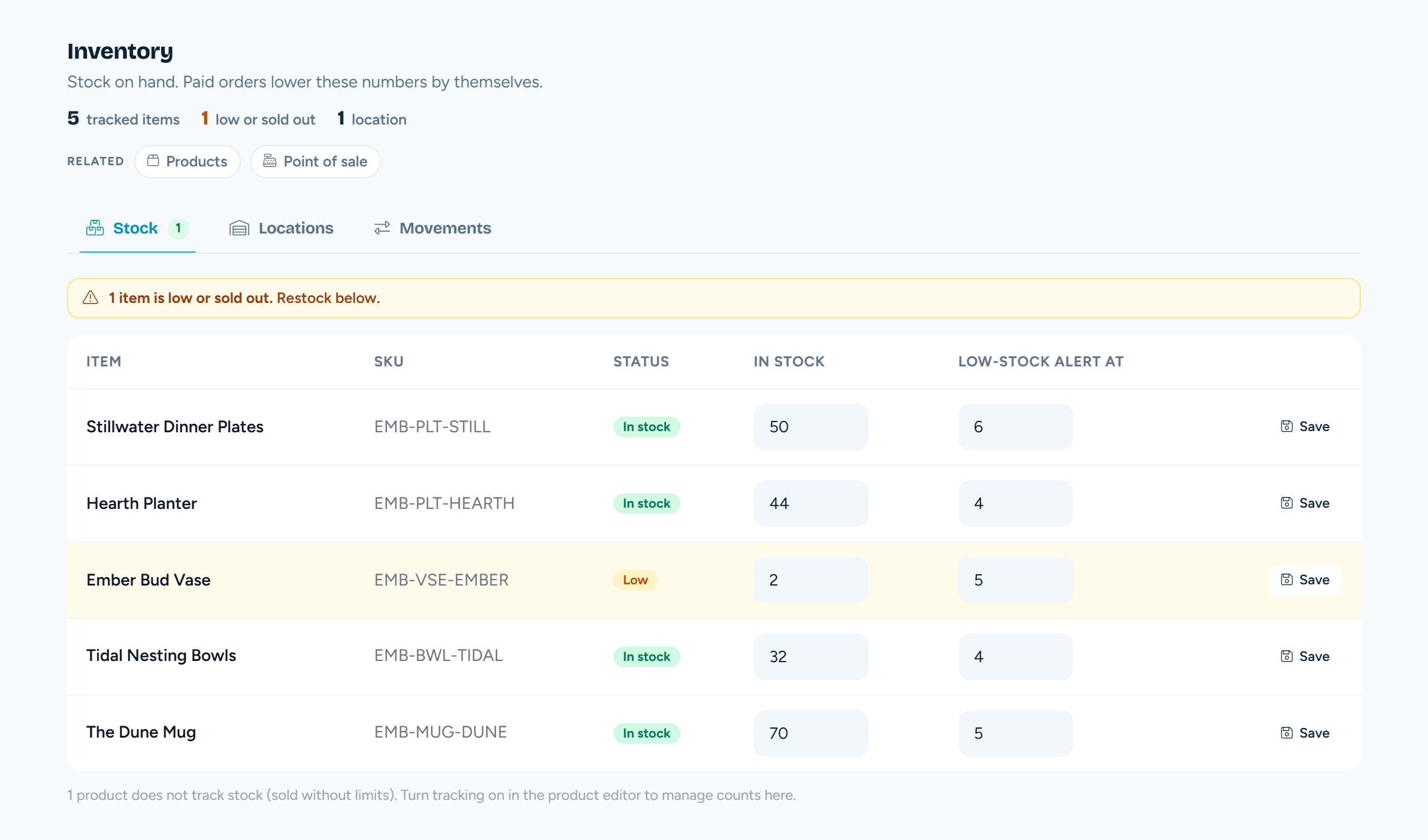
The Inventory screen with stock per item, a low flag and the low-stock alert level
Counts and low flags

Every tracked item, its count, and the line where it starts warning you.

See what it does
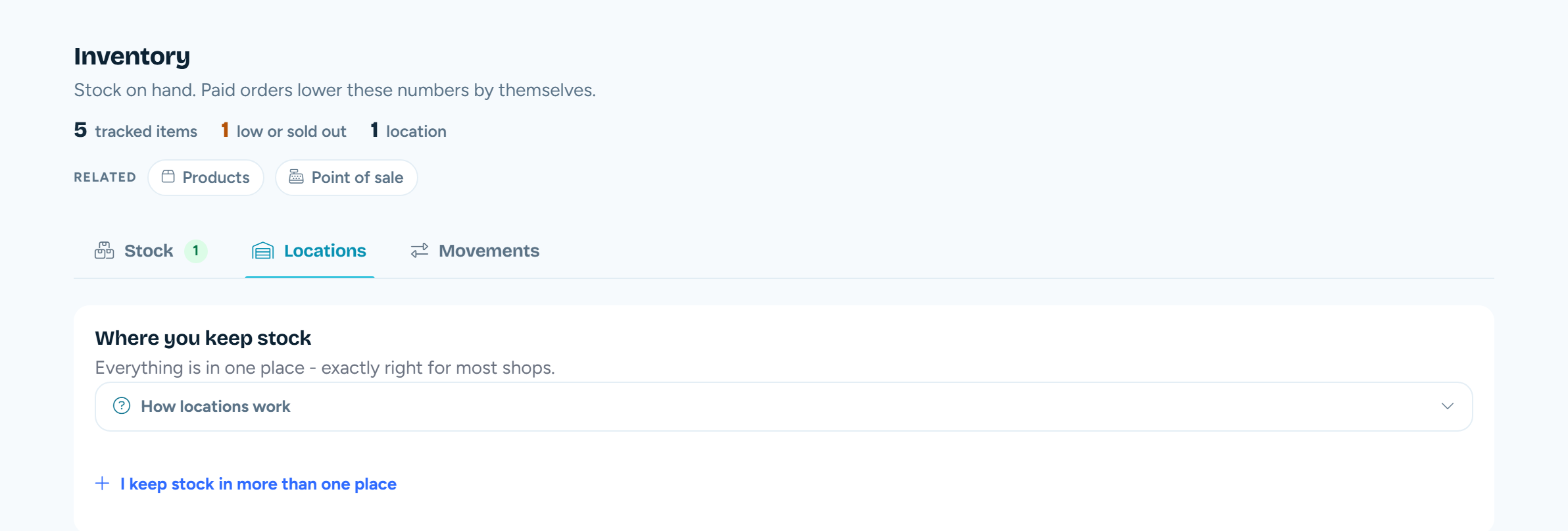
The Locations tab, explaining keeping stock in more than one place
More than one place

A van, a lock-up, a friend's garage. Each with its own count and its own moves.

See what it does
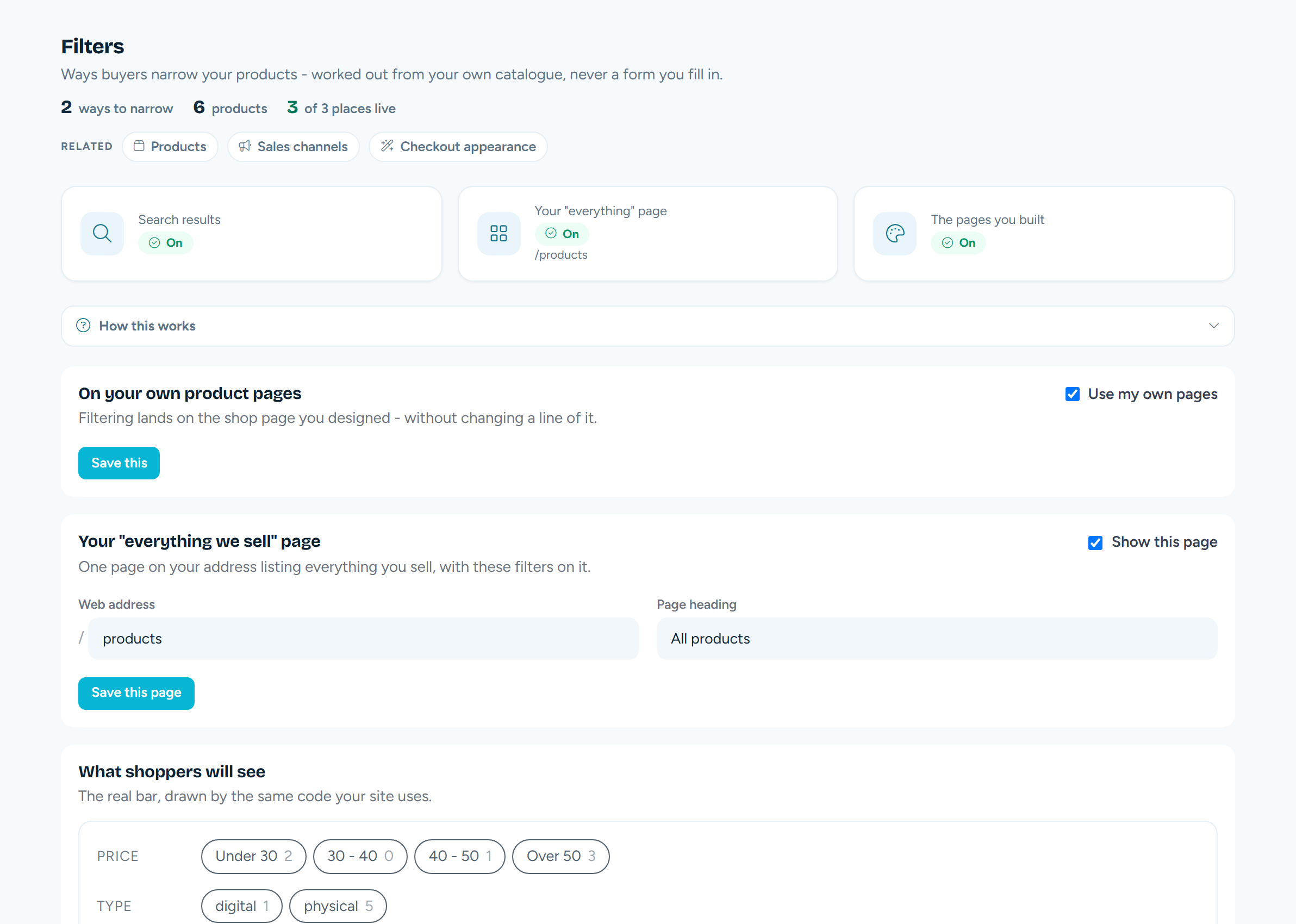
The Filters screen, built from the store's own products
Filters you never typed

Worked out from your own catalogue. Hide one, rename one, pin your favourites.

See what it does
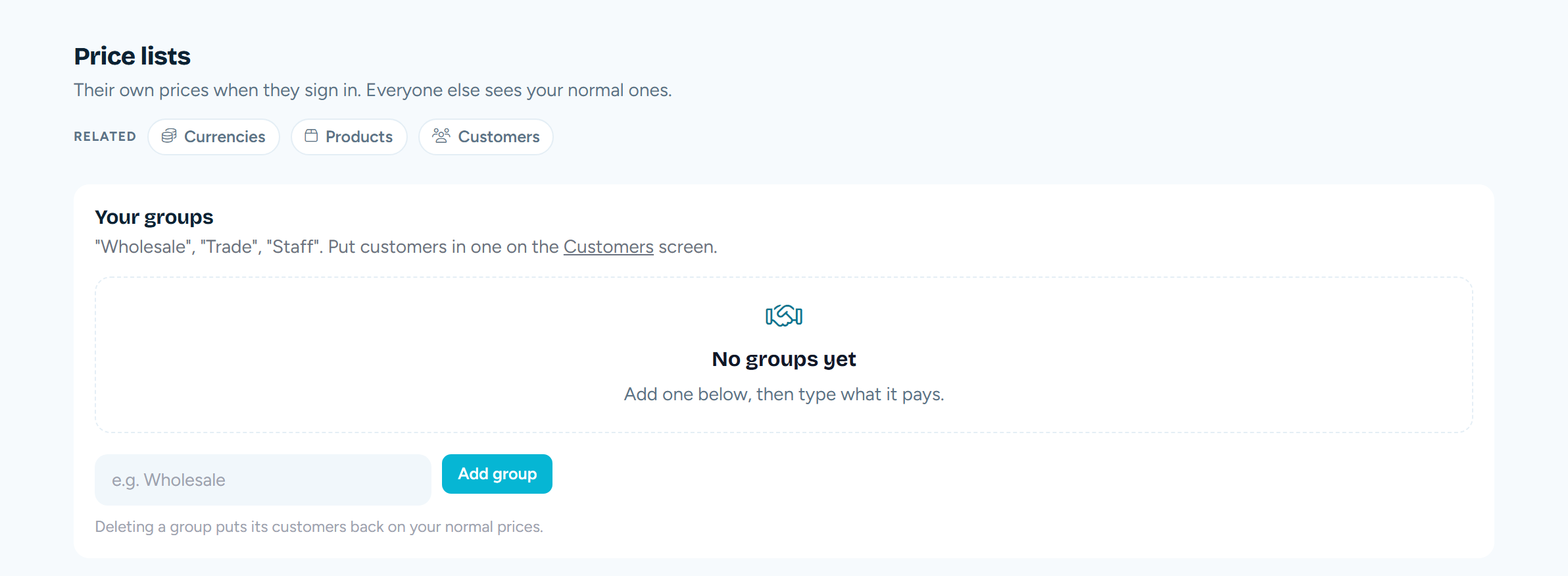
The Price lists screen for giving trade buyers their own prices
Trade prices

Name a group the way you would say it out loud, then type what that group pays.

See what it does
What the shelves need

Seven ways to keep a number honest

All shipped, all included in the $19 store.

01

Stock per product, and per size and colour

The thing people actually buy is a medium in bone, so that is what gets counted. Each combination carries its own number, its own low line and its own status, and a paid order takes it down by itself.

  • Amber when it reaches the line you set, red when it is gone.
  • A sale that would take you below zero is refused rather than oversold.
  • Stock comes down exactly once, even if a payment notification arrives twice.
  • Some things you never want to count. Turn tracking off and they simply sell.
02

Stock in more than one place

A shop, a market van and a storeroom, each with its own count and one total that stays true. An online order draws from the place you nominated; a till sale draws from where the till is standing. Move stock between them and the move itself is written down.

  • Every movement is recorded and never edited: sales, restocks, returns, transfers, corrections.
  • A sale that would oversell is refused and tells you where the stock actually is.
  • A return puts the units back on the shelf the order came off, not just anywhere.
  • Included in the store. Some tools charge per location for this. This one does not.

It is opt-in by design. Until you add a second place, none of this exists for your shop and nothing about it runs.

03

Sell by weight, length or volume

A deli sells coffee at a price per kilo and somebody walks out with 250 grams. Until you can say that properly, that sale can only be told as a fib. Price a product per kilo, per metre or per litre and the quantity is allowed to be a real amount.

  • A decimal quantity is only ever allowed on a product priced that way.
  • An ordinary countable product refuses half of itself, in plain words, instead of rounding.
  • The line is worked out once, so the totals cannot drift by a cent.
04

Kits that cannot drift from their parts

One thing on the shelf that is really three things in the stockroom. A bundle holds no stock of its own, because a second number is a second thing to be wrong. How many kits you can make is simply the smallest answer its parts give.

  • For each tracked part: how many you have, divided by how many the kit needs, rounded down.
  • The smallest of those answers is how many kits are available. Nothing else to maintain.
  • A part you do not track is ignored, so it can never be the thing that runs out.
  • Selling a kit takes its parts down, so the shelf and the website agree.
05

A barcode and a SKU are different facts

Your own part number is one thing; the manufacturer's barcode printed on the box is another. A product or a size can carry both, and keeping them apart is what stops a shopping feed being rejected and a scanner finding the wrong thing.

  • Scanning looks for the barcode first, then falls back to your SKU.
  • A shop that only ever filled in a SKU keeps working exactly as it did.
  • Google is sent the manufacturer barcode and your part number in their own fields.
  • A Shopify export carries both columns, and both come across on import.
06

Let shoppers narrow it down

Size, colour, collection, price, in stock. Built from your own catalogue rather than typed into a form by you, because the answer is already sitting in your products. Then you adjust: hide an axis, rename it in your own words, pin your favourites first.

  • It works on your search results and on a ready-made all-products page you can switch on.
  • It also works on the shop page you designed yourself, without changing a byte of it.
  • Price ranges come from your real prices, not from round numbers somebody guessed.
  • Only the things you changed are remembered. The rest keeps following your catalogue.
07

Prices per currency, and per buyer who earned them

You type a real price per currency. Yetty never invents an exchange rate, because a rate nobody maintains daily is a lie that charges real money. And you can give a group of buyers their own prices, with a from-this-many rule if you want one.

  • A basket stays in one currency from start to finish, and reports never add two into one.
  • A product with no price in a currency is simply not sold in it, and the cart says so.
  • A trade group sees its prices only once signed in. Nobody else ever does.
  • A price you left blank means that group pays your normal one. No trap doors.
Straight answers

Stock and prices, asked plainly

Can I track stock per size and colour?

Yes. Every option combination carries its own count, so a medium in bone and a medium in ink are two different numbers. Each one flags amber when it drops to the line you set and red when it is gone, and an order that would take you below zero is refused rather than quietly oversold.

Can I keep stock in more than one place?

Yes. A shop, a market van and a storeroom can each hold their own count, with one total that stays true, and you can move stock between them. Every movement is written down and never edited, so you can always see where something went. If you only have one place you do not have to think about any of this: nothing changes until you add a second one.

Can I sell by weight or length instead of by the item?

Yes. Price something per kilo, per metre or per litre and a buyer can take 250 grams of it. A decimal quantity is only ever allowed on a product priced that way, so an ordinary countable product still refuses half of itself instead of quietly rounding to something the buyer did not order.

Can I sell a kit made of other products?

Yes. A bundle is one thing on the shelf that is really several things in the stockroom, and it holds no stock of its own. How many kits you can make is worked out from the components: for each one that is tracked, how many you have divided by how many the kit needs, and the smallest answer wins. There is no second number to drift out of sync.

Does Yetty support barcodes?

Yes. A product or a variant can carry a barcode as well as your own SKU, because a manufacturer barcode and your own part number are different facts and Google's shopping feed treats them as different attributes. At the register the scanner looks for the barcode first and falls back to the SKU, so a shop that only ever filled in one of them still works.

Can shoppers filter my products?

Yes, and you never fill in a form to get it. The filters are worked out from your own catalogue: the options your products carry, the collections they sit in, your real prices and what is actually in stock. You can hide an axis, rename it in your own words or pin your favourites first. They work on search results, on a ready-made all-products page, and on the shop page you designed yourself.

Can I sell in more than one currency?

Yes, and you type a real price per currency. Yetty never invents an exchange rate and never converts at checkout, because a rate nobody maintains daily is a lie that charges real money. A basket stays in one currency from start to finish, and your reports never add two currencies into one made-up number.

Can I give wholesale buyers their own prices?

Yes. Put customers into a group you name yourself and give that group its own prices, with a from-this-many rule if you want one. They see those prices once they are signed in, nobody else ever does, and a price you left blank simply means they pay your normal one.

Ready when you are

Numbers you can stand behind.

Free to build, free to try. Counts per variant and per place, honest prices per currency, and 0% of your sales, ever.